


In today’s world, where the effects of environmental degradation are becoming increasingly apparent, the need for sustainable practices is more critical than ever. As industries evolve, businesses that adopt eco-friendly measures are shaping the future of global sustainability. Among them, BethLiving stands out as a pioneer in the furniture industry with its Zero Wood Zero PUF Policy, a revolutionary approach to design and production that aligns with global environmental goals.
This policy isn’t just about furniture; it’s about reshaping how industries impact the planet. By eliminating the use of wood and polyurethane foam (PUF), BethLiving has committed to protecting forests, reducing harmful emissions, and ensuring healthier living environments for its customers. What sets BethLiving apart is not just its dedication to sustainability but its innovative approach to creating products that are durable, stylish, and eco-friendly.
Understanding BethLiving’s Zero Wood Zero PUF Policy
BethLiving’s Zero Wood Policy is a direct response to the pressing issue of deforestation. Each year, millions of hectares of forests are cleared to meet the global demand for wood, causing devastating effects on biodiversity and climate stability. BethLiving has taken a stand against this practice by completely avoiding wood in its furniture production.
Instead, the company uses steel and stainless steel, materials known for their strength, longevity, and recyclability. These materials ensure that BethLiving’s products are not only environmentally sustainable but also superior in quality and durability.
The Zero PUF Policy addresses another significant challenge: the widespread use of polyurethane foam in furniture. PUF is a material associated with harmful environmental impacts due to its production process, which releases toxic chemicals and contributes to landfill waste. Additionally, PUF releases volatile organic compounds (VOCs) over time, degrading indoor air quality and posing health risks. BethLiving has replaced PUF with safer alternatives, ensuring that its furniture supports healthier and more sustainable living.
Why Steel and Stainless Steel?
BethLiving’s decision to use steel and stainless steel is grounded in science and sustainability. These materials are durable, recyclable, and safe, making them ideal for modern furniture production. Unlike wood, steel does not contribute to deforestation, and unlike aluminum, it does not pose significant health hazards during production or use.
Steel and stainless steel are renowned for their strength and resistance to wear and tear. Furniture made from these materials can withstand the test of time, reducing the need for frequent replacements and minimizing waste. Moreover, steel can be recycled indefinitely without losing its properties, making it an integral part of a circular economy.
By prioritizing these materials, BethLiving ensures that its furniture is built to last while maintaining its commitment to environmental preservation.
The Environmental and Health Benefits of Zero Wood
One of the most pressing environmental concerns today is the rapid loss of forests. Deforestation contributes to climate change, disrupts ecosystems, and threatens countless species. By eliminating the use of wood, BethLiving directly contributes to the conservation of forests and the protection of biodiversity.
Beyond environmental benefits, the decision to avoid wood also enhances product durability. Steel and stainless steel are far more resilient than wood, which is prone to warping, rotting, and insect damage. This durability translates to longer product lifespans, reducing the environmental impact associated with frequent furniture replacements.
BethLiving’s commitment to Zero Wood also aligns with the principles of sustainable consumption and production. By using recyclable materials, the company reduces waste and supports a more sustainable approach to manufacturing.
The Risks of PUF and the Benefits of Safer Alternatives
Polyurethane foam has long been a staple in the furniture industry, but its environmental and health drawbacks cannot be ignored. PUF production involves the use of toxic chemicals that release harmful emissions, contributing to air pollution and climate change. Furthermore, PUF products are non-biodegradable, creating long-lasting waste in landfills.
In addition to environmental concerns, PUF poses significant health risks. Over time, it releases VOCs that degrade indoor air quality, potentially causing respiratory issues and other health problems. These risks make PUF an unsuitable material for eco-conscious and health-focused consumers.
BethLiving’s Zero PUF Policy addresses these challenges by replacing PUF with safer, more sustainable alternatives. The result is furniture that not only meets high-quality standards but also supports healthier indoor environments.
Aligning with the UN Sustainable Development Goals
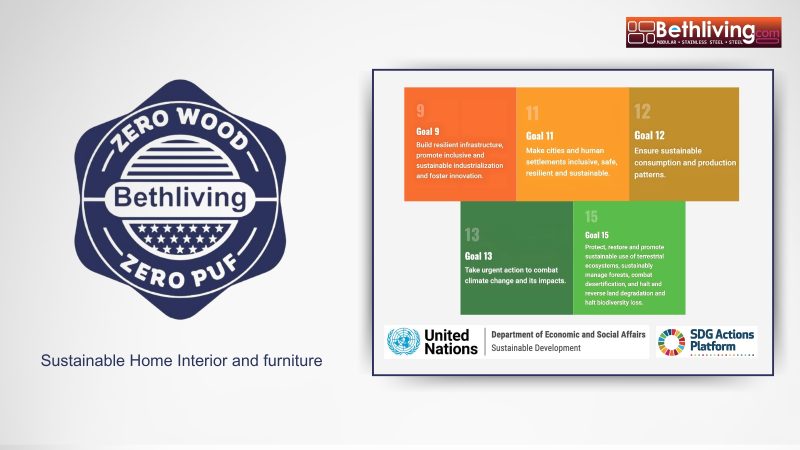
BethLiving’s Zero Wood Zero PUF Policy is more than a business strategy—it is a commitment to global sustainability. This policy aligns with several of the United Nations Sustainable Development Goals (UN SDGs), a set of 17 goals designed to address pressing global challenges
- Climate Action (SDG 13): By avoiding wood and PUF, BethLiving reduces its carbon footprint, helping mitigate the effects of climate change.
- Responsible Consumption and Production (SDG 12): The use of recyclable materials like steel and stainless steel supports sustainable production practices and reduces waste.
- Life on Land (SDG 15): The Zero Wood Policy contributes to forest conservation and the protection of terrestrial ecosystems
- Good Health and Well-being (SDG 3): By eliminating VOC-emitting PUF, BethLiving ensures healthier indoor air quality and promotes customer well-being.
- Industry, Innovation, and Infrastructure (SDG 9): BethLiving’s innovative use of sustainable materials demonstrates how industries can adopt environmentally responsible practices without compromising on quality or style.
Through these contributions, BethLiving exemplifies how businesses can be powerful drivers of positive change.
Pioneering Change in the Furniture Industry
While sustainability is becoming a buzzword across industries, few companies have embraced it as fully as BethLiving. The company’s Zero Wood Zero PUF Policy is a bold, forward-thinking initiative that sets a new standard for furniture manufacturing.
BethLiving’s innovative approach combines style, durability, and sustainability, proving that ecoconscious choices can also be modern and elegant. Its exclusive use of steel and stainless steel reflects a deep commitment to quality, ensuring that customers receive furniture that lasts for decades.
By rejecting materials like aluminum, which can pose health risks, and prioritizing safer alternatives, BethLiving reinforces its dedication to creating products that are as safe as they are sustainable.
Enhancing Home Safety and Comfort with Bethliving’s Zero-PUF Kitchen Doors
When designing a home, every material choice influences the safety, comfort, and well-being of its occupants. Kitchens, in particular, demand high standards of durability, hygiene, and fire safety due to their regular exposure to heat and moisture. One often-overlooked element is the interior filling used in kitchen door panels, which can impact both the functionality and safety of the space. At Bethliving, we pay attention to these details, using only the safest and most durable materials to help you create a healthier home.
One such material that’s frequently used in steel doors is Polyurethane Foam (PUF). PUF is often chosen for its sound-dampening qualities, helping doors feel solid and operate quietly. However, while PUF has benefits, it also brings several risks, especially in high-heat environments like kitchens. As PUF degrades, it can release harmful particles, absorb moisture, and increase fire-related hazards . Additionally, the presence of PUF makes steel doors and cabinets practically nonrecyclable, introducing a series of safety, health, and environmental concerns. To address these issues, Bethliving has designed zero-PUF kitchen doors that provide excellent performance and durability without compromising safety or recyclability. Instead of PUF, our doors are crafted with an intelligent combination of steel and silicon bonding—a proven method also used in fire-safe doors .
Here’s how Bethliving’s zero-PUF kitchen doors elevate your family’s living standards, combining safety, durability, and peace of mind.
- Enhanced Air Quality and Cleaner Living Spaces
As PUF ages, it naturally begins to break down, releasing microscopic dust particles into the air that can be easily inhaled . In confined spaces like kitchens, this dust can become a respiratory irritant and settle on surfaces, leading to increased cleaning needs and posing hygiene concerns in spaces where food is prepared. Bethliving’s zero-PUF kitchen doors are crafted from high-quality, durable materials that resist degradation over time, thereby improving indoor air quality. Our steel and silicon-bonded door panels eliminate the release of dust particles associated with PUF, offering you a cleaner environment and reducing the burden of constant maintenance.
2. Greater Fire Safety with Steel and Silicon Bonding
One of the most important safety considerations in kitchen materials is fire resistance. PUF, although effective in sound insulation, is highly flammable and can emit toxic fumes like hydrogen cyanide and carbon monoxide when exposed to flames . These emissions make PUF unsuitable for fire-safe doors and potentially hazardous in kitchen environments where the risk of fire is higher. Steel and silicon bonding—a technique used in our zero-PUF doors—has long been a standard in fire-safe door construction, as it withstands high temperatures without combusting or releasing toxic gases . By avoiding PUF and incorporating materials that resist flames and prevent harmful gas release, our doors reduce fire hazards and enhance overall kitchen safety.
3. No Moisture Absorption, Reduced Corrosion
The kitchen is a high-humidity environment, with steam from cooking and cleaning creating ample moisture. PUF, when used in steel doors, has a tendency to absorb this moisture, which can lead to problems like mold and mildew growth, unpleasant odors, and accelerated corrosion of the steel structure itself . Over time, as PUF absorbs more moisture, it also breaks down further, releasing more dust and particles into the air and weakening the door’s structural integrity. Bethliving’s zeroPUF doors are specifically designed to prevent moisture-related issues, using steel and silicon bonding to keep moisture and corrosion at bay. This thoughtful design choice results in a kitchen that stays cleaner and healthier over time.
4. Environmentally Responsible Design with Recyclable Materials
One of the major drawbacks of PUF is its impact on recyclability. Unlike steel, PUF is difficult to recycle and poses challenges due to its toxic fumes and residues if processed incorrectly . Recycling steel doors filled with PUF requires specialized facilities, as improper disposal leads to environmental pollution and potential harm from chemical leaching. Bethliving’s zero-PUF doors, on the other hand, are designed with environmental responsibility in mind. By eliminating PUF, our doors are fully recyclable, allowing homeowners to contribute to sustainability efforts without compromising on quality or safety .
Built to Last: A Smart Investment in Durability and Safety
A common misconception about PUF is that it remains effective and durable for decades. In reality, PUF typically lasts around 10 years, but in high-heat, high-humidity environments like kitchens, it may degrade much sooner—sometimes within just 7 years . When PUF degrades, it compromises the door’s sound insulation, safety, and structural integrity, increasing potential hazards in a busy household. Bethliving’s steel and silicon-bonded kitchen doors, by contrast, are built to withstand the test of time. This advanced construction method—recognized and trusted in fire-safe doors— offers a lasting solution that retains quality and durability for years.
Why Bethliving’s Zero-PUF Kitchen Doors Matter for Today’s Homes
Materials in our homes can have a direct impact on our health, safety, and quality of life. As awareness grows around the importance of indoor air quality, fire safety, and durable construction, more families are looking for healthier, more reliable materials in their living spaces. Bethliving’s zero-PUF kitchen doors are crafted to meet these expectations, providing not only excellent sound reduction but also greater safety and durability. By eliminating PUF, we remove the hidden risks associated with aging foam, and by using steel and silicon bonding, we offer the peace of mind that comes with a fire-safe design.
Why Choose BethLiving?
Choosing BethLiving is more than purchasing furniture—it’s making a statement about your values and your commitment to a better future. Every product we create reflects our passion for sustainability and our vision for a world where innovation and environmental responsibility go hand in hand.
With BethLiving, you’re not just investing in furniture that lasts; you’re contributing to the conservation of forests, the reduction of harmful emissions, and the promotion of healthier living environments.
A Call to Join the Movement
Sustainability starts with the choices we make every day. At BethLiving, we believe that every home, office, and space can contribute to a greener, healthier planet. By choosing BethLiving, you’re not just buying furniture—you’re joining a movement that prioritizes the planet and future generations.
We invite you to explore our range of innovative, eco-friendly furniture designed to meet your needs without compromising the environment. Visit BethLiving’s website today and take the first step toward transforming your spaces with sustainable, stylish solutions.
Together, we can build a future where progress is in harmony with nature. Let’s redefine what it means to live sustainably—one piece of furniture at a time.
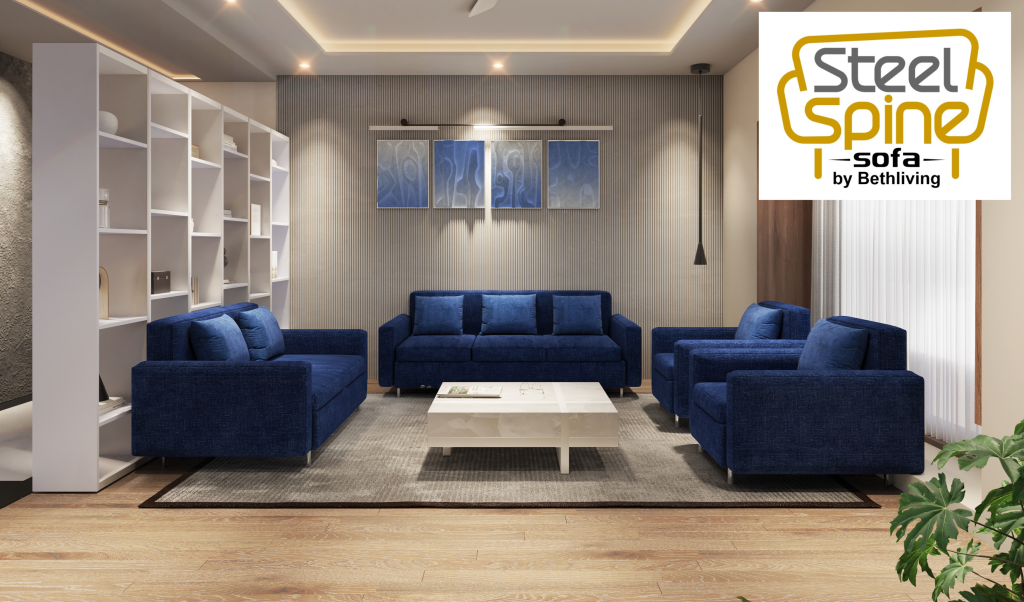
By expanding its scope and strengthening its commitment to the planet, BethLiving is more than a brand—it’s a promise to make every choice count. Join us on this journey and be part of the solution. The time for change is now, and it begins with you.
Experience the Bethliving Difference at Our Experience Centers
Investing in Bethliving’s zero-PUF kitchen doors means choosing quality and security for your home. With a design that combines safety with durability, these doors are a lasting solution for those who value both health and aesthetics. We invite you to visit your nearest Bethliving Experience Center to see the benefits of our zero-PUF kitchen doors in person. Our experts can walk you through the advantages of our steel and silicon bonding, answer any questions, and help you make the right choice for your home.
Discover how Bethliving’s commitment to innovation and safety can elevate your kitchen and make a choice today that supports a healthier tomorrow. At Bethliving, we believe every detail matters, and we’re here to help you create a home where your family’s well-being is always the priority.
References:
- “Fire Hazards of Polyurethane Foam.” National Fire Protection Association.
- “Polyurethane and Environmental Health: The Effects of Degradation.” Environmental Health Perspectives.
- “Fire-Resistant Construction Methods: The Role of Steel and Silicon Bonding.” Journal of Safety Engineering.
- “Indoor Air Quality and Material Degradation.” American Journal of Respiratory and Critical Care Medicine.
- “Combustion Products of Polyurethane: Risks and Implications.” Toxicology and Environmental Chemistry.
- “Fire Safety Standards and Polyurethane Alternatives.” Fire Safety Journal.
- “Moisture Absorption and Corrosion in Polyurethane Foams.” Journal of Material Science and Engineering.
- “Recycling Challenges with Polyurethane-Based Materials.” Waste Management Research.
- “Environmental Benefits of Recyclable Steel Structures.” Sustainable Materials and Technologies.
- “Durability and Degradation of Polyurethane in High-Heat Environments.” Journal of Polymer Science.
These references provide a foundation for the claims made in the blog, ensuring readers understand the evidence-backed benefits of Bethliving’s zero-PUF kitchen doors.