



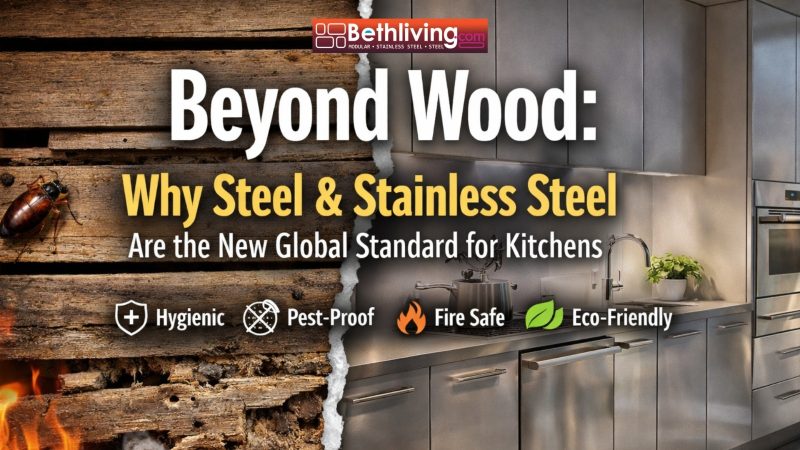
For generations, the modern kitchen has been defined by wood. Plywood cabinets, MDF shutters, and particle-board carcasses became the default materials in across the world. They offered warmth, familiarity, and the comfort of traditional craftsmanship. But the world of home design is undergoing a quiet yet decisive transformation.
Across global design capitals—from contemporary apartments in Milan to luxury residences in Bangalore—steel and stainless steel kitchens are rapidly emerging as the preferred standard. The reason is simple: the kitchen of the future must deliver far more than aesthetics. It must provide hygiene, durability, safety, and environmental responsibility
In this new paradigm, metal is proving to be the superior material.
The Global Hygiene Revolution
The modern homeowner has become far more conscious about hygiene and sanitation—particularly in the aftermath of the pandemic era.
Wood, even when sealed or laminated, remains fundamentally porous. Over time it absorbs moisture, grease, and microscopic food particles. These create ideal conditions for bacteria, mold, and microbial growth, particularly in humid environments.Steel and stainless steel, by contrast, are non-porous materials. Their surfaces do not absorb contaminants, making them far easier to sanitize and maintain.
This is precisely why the world’s most demanding environments—hospital surgical units, pharmaceutical labs, and professional commercial kitchens—have relied on stainless steel for decades. What was once considered a professional standard is now becoming the logical choice for homes
Eliminating the Pest and Termite Problem
In tropical and subtropical climates, wooden furniture faces a persistent threat: pests.Termites, borers, cockroaches, and ants often find ideal nesting spaces within wooden cabinetry. Over time, even high-quality plywood can develop microscopic cracks, joints, and cavities where pests thrive.
Maintaining wooden kitchens often requires periodic chemical treatments, which add cost and introduce toxins into the living environment.Steel and stainless steel eliminate this problem entirely.
Metal cabinets cannot be eaten, bored into, or colonized by termites or insects. Their rigid structure also prevents the formation of the hidden gaps where pests usually breed. The result is a kitchen environment that remains cleaner and healthier without relying on chemical pest control.
Fire Safety and Heat Resistance
Among all areas of the home, the kitchen carries the highest fire risk.Wood-based cabinetry introduces an inherent vulnerability: it is combustible. In the event of a kitchen fire, wooden structures act as fuel, accelerating the spread of flames.Steel and stainless steel, on the other hand, are non-combustible materials. They do not ignite, burn, or contribute to the spread of fire.
Modern cooking environments also expose cabinetry to intense heat, steam, and temperature fluctuations. Wood can warp, swell, or degrade under these conditions. Engineered wood products may also release volatile organic compounds (VOCs) when subjected to high heat. Metal structures remain stable under extreme conditions, maintaining their integrity and safety even in demanding cooking environments.
Engineering for Decades, Not Years
One of the strongest drivers behind the global shift toward metal kitchens is long-term value. Traditional wooden kitchens often require significant repair or replacement within 8–12 years due to moisture damage, structural fatigue, pest damage, or laminate deterioration.
Steel and stainless steel kitchens operate on a completely different lifecycle.Metal is immune to humidity, resistant to corrosion when properly treated, and unaffected by accidental water leaks from sinks or plumbing. Even in coastal regions with high salt exposure or in areas with extreme humidity, steel kitchens maintain their structural strength.A well-engineered steel kitchen can easily last 25–40 years or more, making it a long-term investment rather than a periodic replacement.
Metal vs. Wood: The Clear Performance Advantages
When evaluated through the lens of performance, durability, and long-term value, steel and stainless steel kitchens demonstrate several decisive advantages over traditional wood or MDF kitchens.
Complete Water Resistance Steel and stainless steel kitchens are completely waterproof. Exposure to moisture, steam, or accidental water leakage does not affect their structure. Wooden kitchens, by contrast, are vulnerable to swelling, warping, and long-term damage when exposed to water.
Superior Fire Safety Metal kitchens are non-combustible and do not contribute to the spread of fire. Wooden cabinets are inherently flammable and can act as fuel during a kitchen fire, significantly increasing the risk.
Natural Pest Resistance Steel cabinetry is naturally termite-proof and cannot be damaged by borers or insects. Traditional wooden kitchens often require periodic chemical treatments to prevent termite infestations and pest damage.
Environmental Sustainability Steel is fully recyclable and can be reused indefinitely without losing its structural integrity. Wooden kitchens rely on timber extraction and engineered wood products that contribute to deforestation and often contain chemical resins.
Significantly Longer Lifespan A well-engineered steel or stainless steel kitchen can last 15–20 years or more with minimal maintenance. In comparison, many wooden or MDF kitchens begin to deteriorate within 5–8 years due to moisture exposure, pest damage, or structural fatigue.
A Sustainable Choice for the Future
Sustainability has become a central concern in global manufacturing and design.Wood-based furniture contributes significantly to timber demand, and many engineered wood products rely on adhesives and resins that contain formaldehyde and other chemicals.
Steel offers a dramatically different environmental profile.
It is the most recycled material on Earth. Unlike many materials that degrade after recycling, steel can be melted and repurposed repeatedly without losing strength or quality. This allows it to participate in a truly circular material economy.
Choosing steel kitchens therefore reduces pressure on forests while also minimizing chemical emissions associated with engineered wood products.Fire safety, pest protection, chemical-free living, and touch safety—key factors families consider when choosing home interiors.
The Evolution of Design
For many years, metal kitchens were associated with industrial spaces or commercial environments. That perception has changed dramatically.
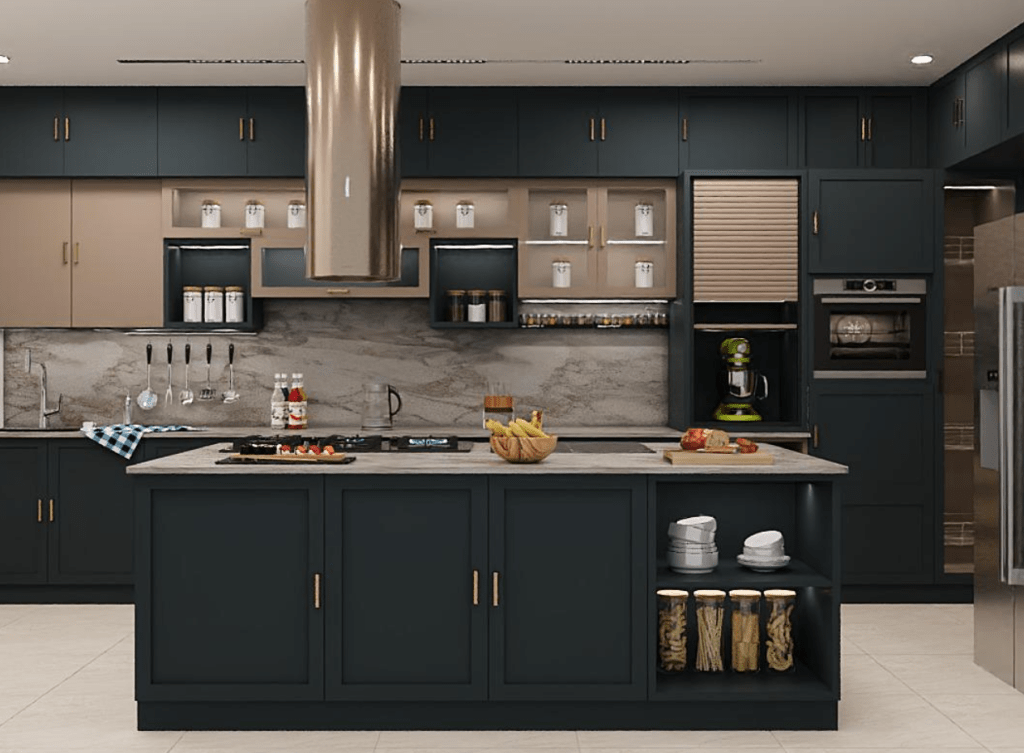
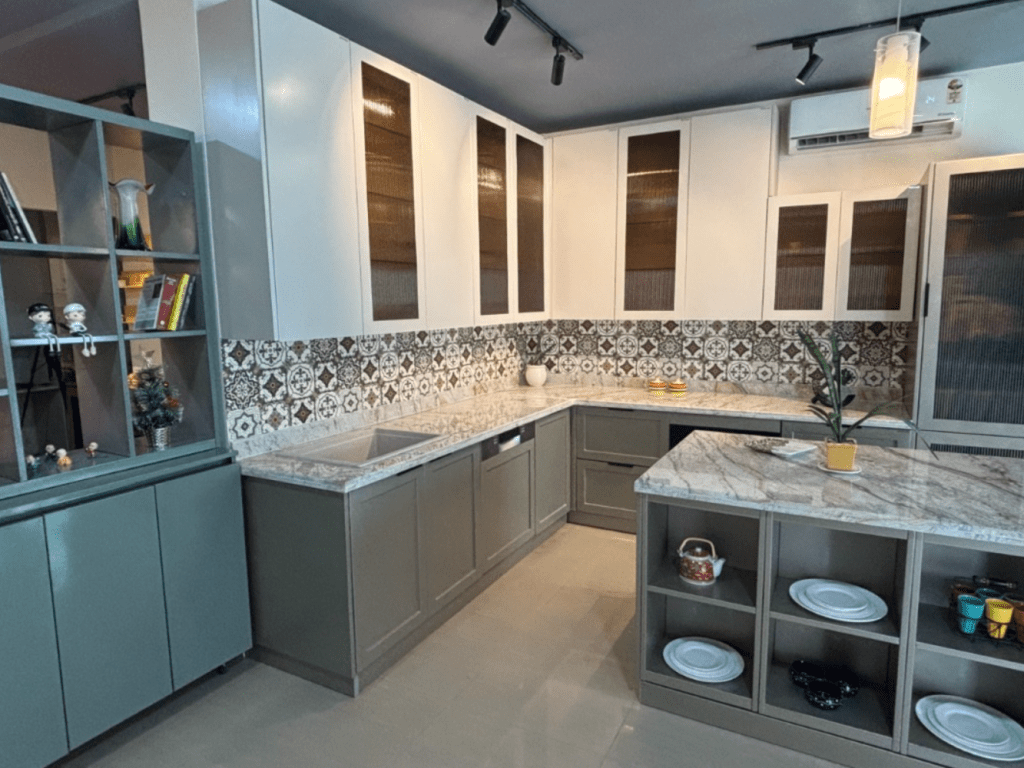
Modern manufacturing technologies now allow steel kitchens to be finished in a wide spectrum of colors, matte textures, brushed surfaces, and even sophisticated wood-grain effects.
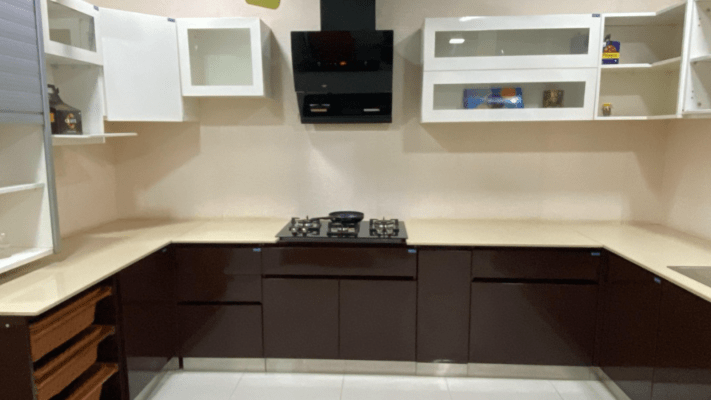
The structural strength of steel also enables slimmer panels, seamless joints, and handle-less minimalist designs that are difficult to achieve with bulkier wooden structures. The result is a kitchen that combines architectural elegance with industrial strength
The Inevitable Transition
Every generation of home design is shaped by the materials that define it.Wood dominated the kitchens of the past because it was the best solution available at the time. But as expectations around hygiene, safety, durability, and sustainability continue to rise, the limitations of wood are becoming increasingly clear.
Steel and stainless steel represent the next stage in the evolution of the modern kitchen. Homeowners are no longer simply purchasing cabinets—they are investing in a high-performance culinary workspace designed to endure decades of use.The kitchen of the future is not merely designed.It is engineered and increasingly, it is forged in steel.
Author:George Thomas is the CEO of Beth Lifestyle Private Limited (Bethliving), a company pioneering engineered steel kitchens and modern kitchen ecosystems for Indian homes. Explore more at bethliving.com.