




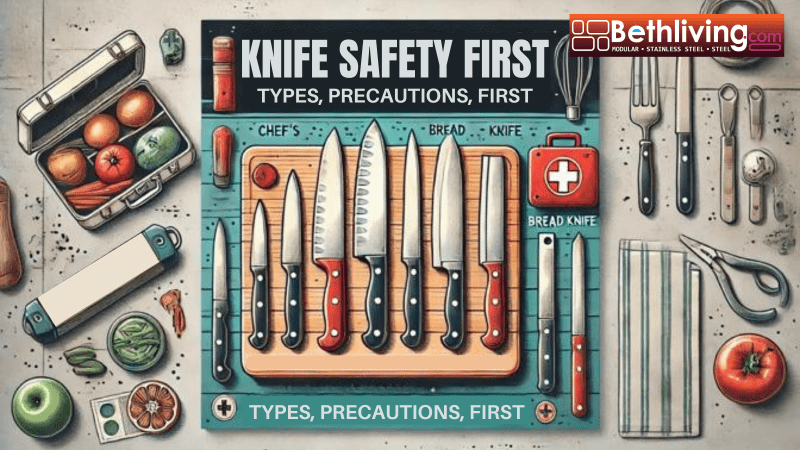
Knives are the backbone of any kitchen, transforming raw ingredients into culinary masterpieces. Yet, their power demands respect. A momentary lapse in focus or improper technique can turn this indispensable tool into a hazard. Whether you’re a novice or a pro, prioritizing safety while understanding knife types and precautions is non-negotiable. Let’s explore how to wield blades confidently and responsibly.
Types of Knives: Matching the Blade to the Task
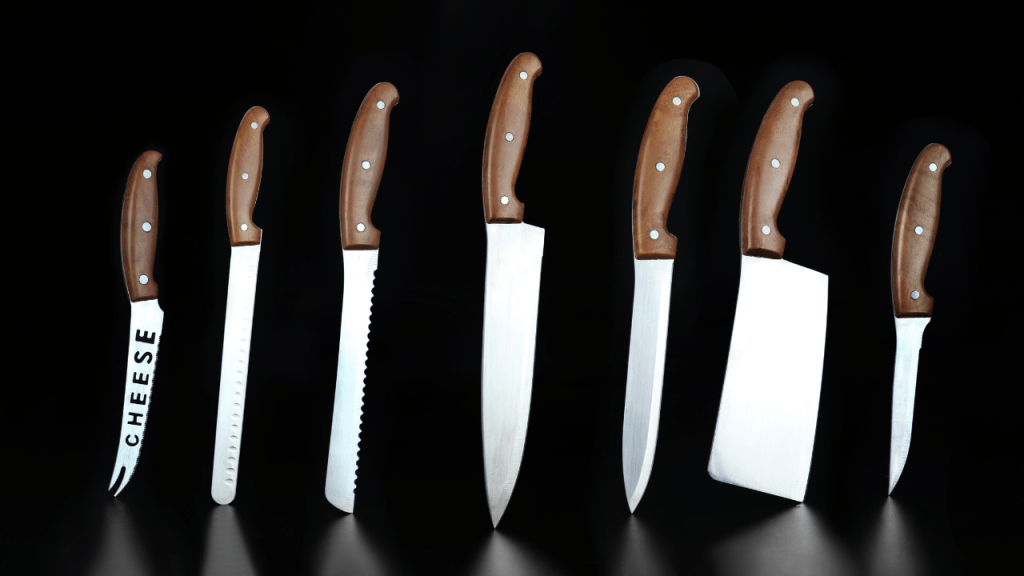
- Chef’s Knife – Purpose: Versatile chopping, slicing, and dicing. Safety Tip: Its curved edge is designed for a rocking motion—keep fingers clear of the blade’s path.
- Paring Knife – Purpose: Detailed work like peeling or coring. Safety Tip: Always cut away from your hand to avoid accidental slips.
- Utility Knife – Purpose: Medium tasks (e.g., slicing tomatoes or cheese). Safety Tip: Use a stable cutting board to prevent the blade from wobbling.
- Bread Knife – Purpose: Sawing through crusty loaves or delicate desserts. Safety Tip: Let the serrations do the work—avoid applying excessive downward force.
- Boning Knife – Purpose: Deboning meat or fish. Safety Tip: Keep the blade angled away from your body to avoid punctures
- Cleaver – Purpose: Chopping bones or dense produce. Safety Tip: Use a firm grip and a sturdy surface to prevent rebound injuries.
- Santoku Knife – Purpose: Precision slicing and julienning. Safety Tip: Its sharp edge requires controlled, deliberate strokes—no hurried motions.
Pro Safety Reminder: Dull blades are dangerous. Sharpen regularly and store knives securely.

Knife Precautions: Avoiding Costly Errors
- Never Leave Knives in Soapy Water : Submerged blades are invisible hazards. Wash and dry knives immediately after use.
- Resist the “Quick Fix” : Using a knife to open packages or pry lids can damage the blade and lead to accidents.
- Secure Your Cutting Board : Place a damp cloth under the board to prevent slippage during use.
- Mind Your Workspace : Keep the area clutter-free—knives, cords, or stray ingredients increase tripping or grabbing risks.
- Avoid Multi-Tasking : Focus solely on cutting. Texting, chatting, or reaching for items mid-task invites mishaps.
- Dress Appropriately: Avoid loose sleeves or dangling jewellery that could catch on the blade.
Knife Safety Practices: Protecting Yourself and Others
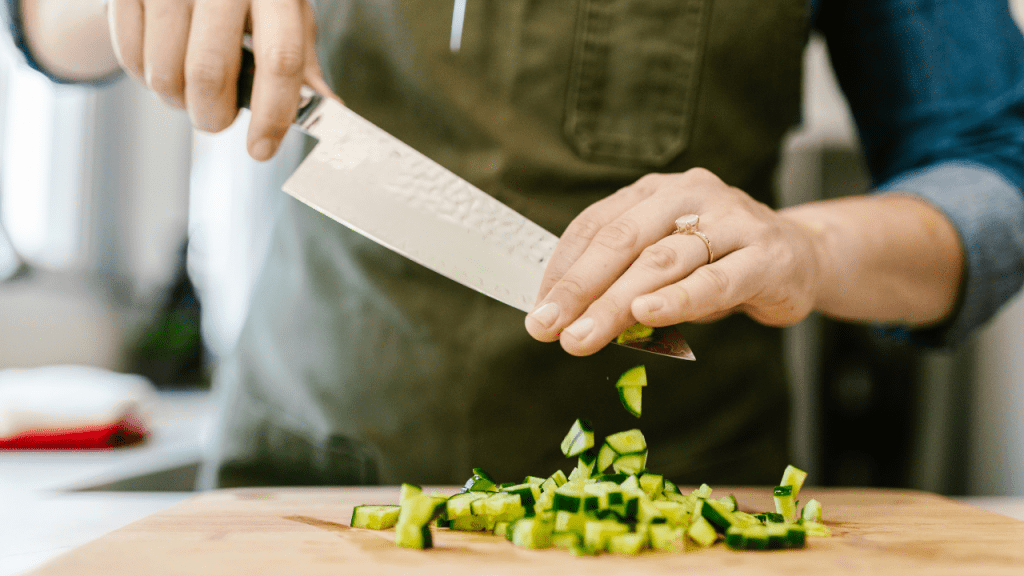
- Master the Claw Grip : Tuck fingertips inward and use knuckles to guide the blade, keeping fingers safe.
- Cut on Stable Surfaces : Never hold ingredients in your palm while cutting—use a cutting board at all times.
- Pass Knives Safely : Place the knife on the counter and let the other person pick it up—never hand it directly.
- Store with Care : Use blade guards, magnetic strips, or knife blocks. Loose storage risks accidental contact.
- Teach Kitchen Safety : Educate children early: knives are tools, not toys. Supervise beginners closely
- Emergency Readiness : Keep a first-aid kit nearby. For deep cuts, apply pressure, elevate the wound, and seek help.
Maintenance: Keeping Blades Safe and Effective
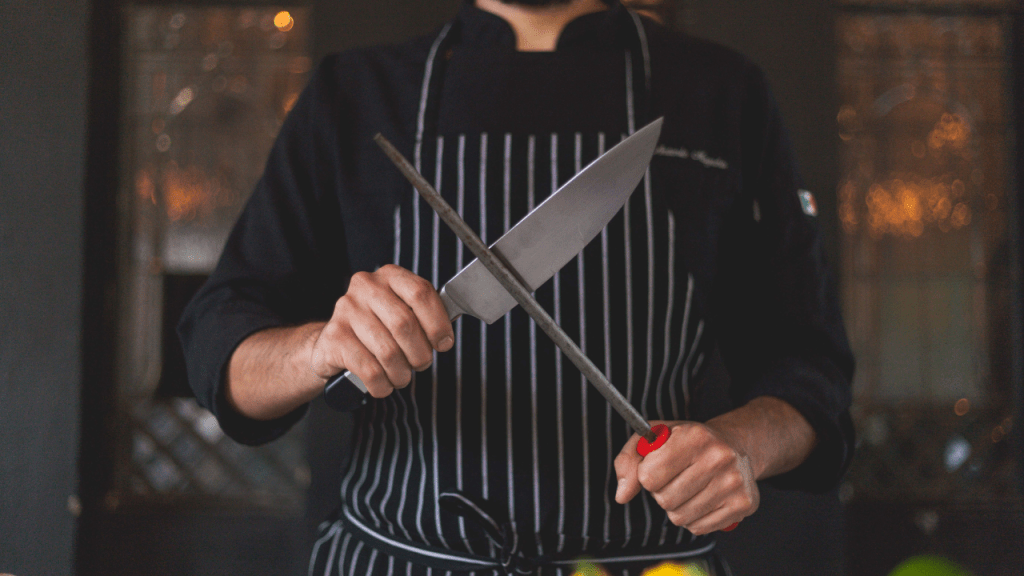
Hone Regularly: Use a honing rod to maintain edge alignment.
Sharpen Mindfully: Professional sharpening preserves blade integrity—avoid DIY grinders.
Check for Damage: Cracks, rust, or loose handles compromise safety. Repair or replace faulty tools.
By pairing the right knife with the task, respecting its sharpness, and adopting disciplined habits, you’ll create a kitchen environment that’s as safe as it is efficient.